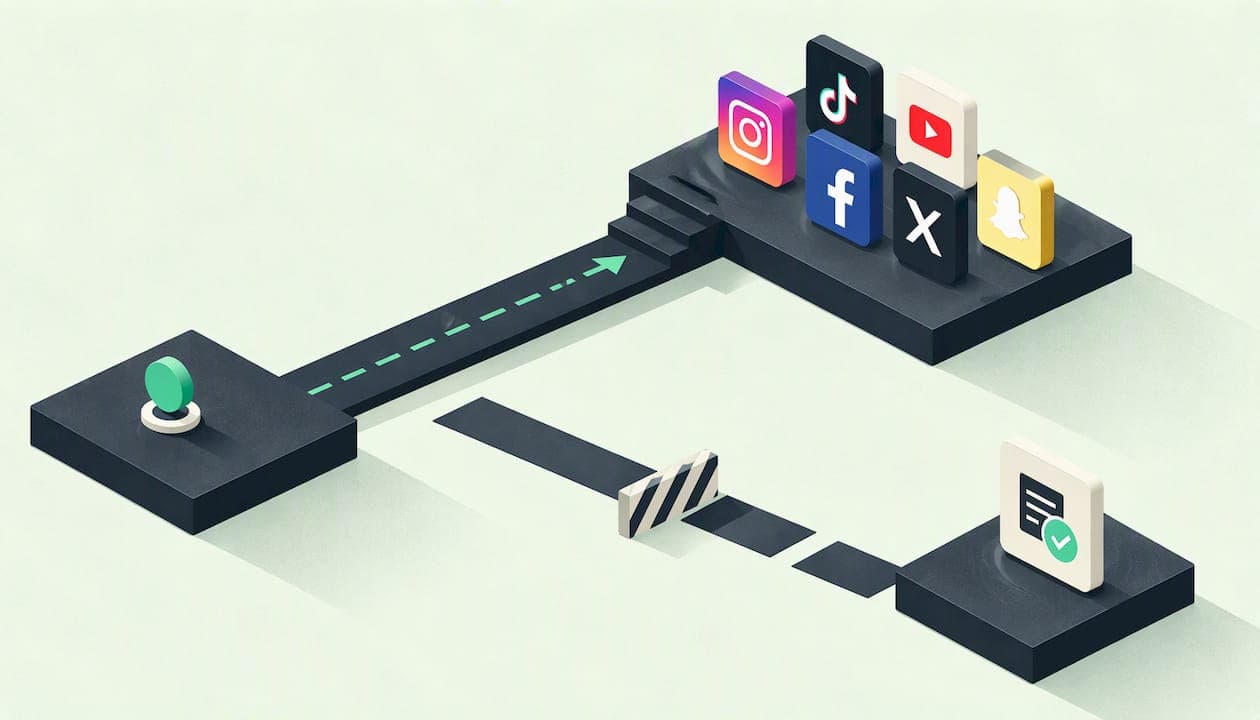
Most of the big social media settlements in the headlines will not send you a check. The multibillion-dollar deals resolve claims brought by governments or by injured plaintiffs with lawyers. Smaller consumer class actions over privacy, data breaches and spam texts are the ones that usually let an ordinary user file a claim online. This guide separates the two, shows you how to confirm a claim is real, and covers the related settlements readers ask about most.
TL;DR
- The Meta deal with state attorneys general resolves the states' claims. It does not create a claim form for individual users.
- Consumer settlements over privacy, data breaches and unwanted texts are where individuals can file, usually online and always for free.
- Always start from the official settlement website named in the court notice, never from an ad, a text or a lookalike page.
- Deadlines come in sequence: opt-out and objection dates first, then the claim deadline, then payments after final court approval, often many months later.
- We list free-to-file settlements that need no proof of purchase, and we send deadline reminders so you do not miss them.
Table of Contents
- Why the headline settlements rarely pay you directly
- Social media class actions that have paid users
- Healthcare data breach settlements
- Email data breach settlements
- Spam text settlement claims
- How to verify a settlement before you file
- Our view: why we only list claims that are free and proof-free
- Get the weekly list instead of searching
- FAQ
- Sources
Why the headline settlements rarely pay you directly
The news about social media settlements in 2026 has been dominated by teen mental health and addiction cases. Meta agreed to pay up to $17.1 billion to resolve the lawsuit brought by state attorneys general, and Snap and TikTok settled the first personal-injury trial in Los Angeles for undisclosed sums before it began.
Those numbers look like something you could claim a share of. You generally cannot. The consent judgment filed in the state case says it creates no private right of action for non-parties, and that only the participating states and the court can enforce it. The money goes to the states, along with child-safety changes to the platforms. Using Facebook or Instagram does not put you on a claim list.

The same logic applies to other government deals. The Federal Trade Commission's 2019 order against Facebook required a $5 billion civil penalty and changes to the company's privacy order. A penalty paid to the government is not a fund for users.
Three kinds of cases that get confused
| Type of case | Who sues | Can you file a claim? |
|---|---|---|
| Government enforcement (state attorneys general, FTC) | A state or federal agency | No, unless the agency opens a refund program |
| Personal-injury litigation (addiction, self-harm) | Individual plaintiffs and their lawyers | Only by hiring a lawyer or joining the litigation |
| Consumer class action (privacy, data breach, spam texts) | Named plaintiffs on behalf of a whole class | Yes, if you fit the class definition |
The third row is where most free claims live. If a law firm's page tells you that you may be entitled to compensation for a social media injury, it is recruiting clients for the second row. That is a different process with different costs, and it is not what a class-action claim form is.
Social media class actions that have paid users
The best-known example is the Facebook privacy case, In re Facebook, Inc. Consumer Privacy User Profile Litigation. The official settlement website states that the claim period closed on August 25, 2023, and that payments began in September 2025. That timeline is typical. A claim can sit for two years or more between filing and payment, because courts must approve the deal, handle appeals and then verify claims.
The same website shows what a legitimate notice looks like. It names a single court-appointed administrator, explains who is in the class, lays out your rights to opt out or object, and says the administrator will not ask you for a payment or a Social Security number. If a message about a settlement asks for either, stop.
Other consumer social media cases have followed the same pattern, including a privacy class action against TikTok for U.S. residents who used the app before a cutoff date. We do not quote figures for open cases here because amounts and deadlines are revised, so use the official settlement site for the current numbers.
What these settlements usually ask for
To file, a social media claim form generally wants:
- Your name, mailing address and email
- The username, linked phone number or email address tied to the account
- A statement that you were in the class during the dates the notice lists
- Your preferred payment method
- A unique claim ID from the notice, if you received one
It rarely asks for receipts. Social media is mostly free to use, so these settlements typically rely on your attestation under penalty of perjury that you were a user. That is why they suit a no-proof-of-purchase list.
Healthcare data breach settlements
People who search for social media settlements often also search for healthcare breach settlements, and for good reason: they share the same structure and the same "no receipt" convenience.
Two recent examples show the range:
- In the Community Dental Care case, class members whose personal information was accessed in a December 2024 cyberattack could file for documented losses up to $5,000.00 or a one-time $50.00 alternate cash payment. The claim form was due by October 19, 2026.
- In the AMCA breach case involving Labcorp (Case No. 19 MD 2904), the documents page listed a claim deadline of September 3, 2026.
Both are now closed, which makes the point. Breach settlements run on tight windows, often only a few months from notice to deadline, and a missed date means no payment. The pattern is a fixed cash option with no paperwork, plus a higher cap for people who can document actual losses such as fraud charges or time spent fixing the problem.
Before you file in a healthcare breach case, check:
- Whether the notice letter you received matches the settlement name. Breaches often produce several overlapping cases.
- Whether you are choosing the flat payment or the documented-loss option. Documented losses need records, and you should keep them.
- Whether the offer includes credit monitoring or medical data monitoring and whether you want it.
If you think your medical information has been misused, a healthcare provider's compliance office or a consumer protection attorney can advise on steps beyond a claim form. A settlement claim is not a substitute for freezing your credit or reporting identity theft.
Email data breach settlements
Email breach settlements follow the same template as other breach cases. A company that held email addresses, and often names, passwords or other account details, lost them in an attack. The class is the people whose data was exposed. The remedy is usually a modest flat payment, some reimbursement for documented losses, and a period of monitoring.
Three checks matter most here:
- The class definition. It may cover only people whose email was in a specific database during a specific window. Having an account with the company is not always enough.
- The notice you received. Companies send breach notices by mail or email. A notice with a claim ID is the cleanest route to the official site. If you lost it, go to the website named in a court-approved notice or the court docket.
- The sender. Scammers imitate breach notices because they know people have received real ones. Do not click a link in an unexpected email. Search for the case name and caption, then find the administrator's page through the court record.
Because breach payouts are often split pro rata, the final amount can fall below the advertised figure when many people file. Treat any dollar figure as a ceiling, not a promise.
Spam text settlement claims
Unwanted marketing texts are another route open to ordinary consumers. These cases usually rest on the Telephone Consumer Protection Act, which restricts certain automated calls and texts. A recent example is Grippo v. Sugared + Bronzed, LLC (Case No. 8:24-cv-01792-AB-DFM, C.D. Cal.), which resolved allegations that the company sent telemarketing texts after recipients asked it to stop. The settlement website listed a claim deadline of October 2, 2026, so it is closed, but the facts are a good model of how these cases work.
To qualify for a spam text claim you typically need:
- The phone number that received the texts
- A statement that you received them during the class period
- In some cases, confirmation that you had told the sender to stop
Texts are rarely documented the way a purchase is, so these claims typically rely on a sworn statement and the sender's own records. Check that the number on the claim form matches the one on the class list, because administrators often match against it.
How to verify a settlement before you file
Settlement scams are common because the real thing looks tempting: a website, a deadline, a form that asks for personal information. Run through this checklist every time.
- Find the case name and number. A real notice lists the court, the case caption and a number, such as the ones above.
- Go to the website named in the notice. Type it in yourself. The administrator named on the site should match the notice.
- Confirm you are in the class. Read the class definition, including dates. Do not file if you do not qualify, because false claims can be rejected and may carry legal consequences.
- Never pay to file. The FTC states that it never asks you to pay to file a claim or get a refund, and warns that only scammers promise special access or guaranteed refunds. Court-approved class settlements follow the same principle: the cost comes out of the fund, not out of your pocket.
- Do not hand over a Social Security number or bank login. A claim form may ask how you want to be paid, but it does not need your full SSN, and an administrator will not ask for payment.
- Note the deadlines. Write down the opt-out date, the objection date and the claim date. An opt-out deadline comes first, and it applies only if you want to keep your right to sue separately.
- Keep your confirmation. Save the confirmation page or email so you can follow up if payment is delayed.
The sequence of deadlines
Most class settlements run through the same stages: a court grants preliminary approval, notice goes out, the claim window opens, there is a fairness hearing for final approval, and only then does money move. If someone appeals, payments wait. Filing early costs you nothing, but the payout date is out of your hands. For any open case, the official site's FAQ page will list the current schedule.

Our view: why we only list claims that are free and proof-free
We built Quickeasyclaims around a simple observation. Most people do not skip settlement money because it is hard to get. They skip it because it is hard to find, hard to tell apart from lawyer ads, and easy to miss by a week.
So we apply two filters. A settlement goes on our list only if filing is free and it does not require proof of purchase. That rules out most claims that need receipts, and it rules out anything that asks you to pay a fee or sign with a firm first.
We also decline to inflate the headline cases. When a settlement is between a company and a government, we say so and do not pretend there is a claim form. A reader who clicks a page promising social media addiction payouts and finds a lawyer's intake form has lost time and, often, a little trust. We would rather tell you straight that no claim exists.
Finally, we think the weakest part of the process is the gap between a notice and a filing. That is why each entry explains how to get through the official settlement website, and why the weekly newsletter carries reminders before a deadline and a note when payouts begin.
— Quick
Get the weekly list instead of searching
If you would rather not track dockets, Quickeasyclaims sends a free weekly newsletter with curated class-action settlements that do not require proof of purchase. Each one comes with instructions for filing on the official settlement site, plus deadline reminders and payout notifications. Filing is free, and you do not need a lawyer.
We do not charge for the list or the guidance, and we point you only to the official site for each claim, so there is nothing to pay on our end or theirs.
FAQ
Can I get money from the Meta social media settlement?
Not from the state attorneys general deal. The consent judgment resolves the states' claims and gives no private right of action to people who are not parties. If you or your child suffered serious harm, you would need to speak with an attorney about personal-injury litigation, which is a separate process.
Is it free to file a social media settlement claim?
Yes. A legitimate class settlement never charges you to file, and the administrator's costs are paid from the settlement fund. If a site or a message asks for a fee, a Social Security number or a bank login, treat it as a scam and leave.
Do I need proof of purchase to file?
Usually not for social media, data breach and spam text cases. These claims typically rest on your statement that you were in the class, such as a user of an app in a given period or a recipient of texts at a phone number. Some documented-loss options in breach cases do require records, so read the claim form closely.
How long does it take to get paid?
Often a year or longer after you file. The Facebook privacy settlement, for example, closed to claims in August 2023 and began payments in September 2025. Payment waits for final court approval and for any appeals to finish.
What if I missed the deadline?
The claim is usually lost, because administrators and courts enforce deadlines strictly. Check the official site anyway, since some settlements are extended, and set reminders for the next one.
Sources
- States, Meta agree to $17 billion settlement (Yahoo Finance)
- Meta consent judgment, Exhibit 1 (New Jersey Attorney General)
- FTC Commission decision on Facebook order modification
- Facebook User Privacy Settlement
- Community Dental Care claim form
- AMCA Data Breach Settlement documents
- Grippo v. Sugared + Bronzed settlement website
- FTC NGL Settlement refunds page